Sarina

About Sarina Gandy

This author has not yet filled in any details.
So far Sarina Gandy has created 127 blog entries.

James “Jim” Aldrich

Jim joined the Center in July 2022 after serving over 50 years in the Intelligence Community (IC) in a variety of positions focused on Signals Intelligence (SIGINT) and Cyber Security missions as well as associated Education & Training. He is a retired Marine Corps Intelligence Officer, and Arabic linguist, who served 28 years in a wide range of assignments within the U.S. and overseas locations. After retiring in 1998, he worked for the Aerospace Corporation supporting the National Reconnaissance Office from 1998-2002 and then became a National Security Agency (NSA) employee for 20 years; the last 18 as a member of the Senior Executive Service (SES). He held several positions spanning the agency’s SIGINT and Cyber Security missions: NSA Representative to U.S. Special Operations Command, NSA Representative to U.S. Transportation Command and NSA Representative (forward deployed) in the U.S. Central Command area of responsibility. In these roles he evaluated the customers’ requirements and ensured agency resources were applied – where possible. 2004 – 2010 Jim served as the senior NSA official in Operations at the agency’s facility on Fort Gordon Georgia – focused largely on support to USSOCOM, USCENTCOM, and JSOC. Based on his breadth of experience, and previous work as both an Instructor and Course Director, he was selected to serve as the Deputy Commandant of NSA’s National Cryptologic University; responsible for orchestrating Education & Training to over 40,000 civilians and military members working with the agency. In his last assignment at NSA his office provided strategic planning support to the NSA Board of Directors and several large NSA organizations located both in the U.S. and overseas locations. Jim is a graduate of Texas A&M (BA in International Relations) and the U.S. Naval War College (MA in National Security & Strategic Studies) and has also completed several Senior Executive level leadership courses sponsored by the IC and DoD. He has been married to his wife Marilyn since 1973. Jim & Marilyn both grew up in southeastern Illinois farm country. They live near Center Hill Florida on a 14-acre horse farm. They have three adult children, ten grandchildren and a growing number of great grandchildren.

James “Jim” Aldrich2025-01-22T15:44:41-05:00

Cyber Safety Tips for Travel

Technology is a modern-day traveler’s best friend. It can make the trip-planning process more convenient and cost-effective: booking accommodations and flights, researching must-see spots, and financial planning can all be done with a connection to the internet and a Google search. And for most of us, it doesn’t stop once we’re actually on vacation – we still use our devices to share pictures, navigate, and stay connected to the world back home.

While cyber and technology can be great for enhancing travel, there are also risks associated with planning your travel online. Cyber travel scams such as fake websites and juice jacking are becoming increasingly common, which is why it’s essential to consider your assets in the digital world before heading off to explore the physical one.

As you prepare to embark on your next adventure, consider the following tips from the National Cybersecurity Association and the Cybercrime Support Network to help you remain protected against cyber travel scams and ensure that your biggest worries this summer are high humidity levels and reapplying SPF.

Common Cyber Travel Scams

Fake Websites

There are dozens of online sites claiming to offer the best travel deals and packages. A good rule to remember in this instance is: if it seems too good to be true, it probably is. Scammers create fake travel booking websites that look like legitimate ones, but are designed to steal your money and personal information. They might offer attractive deals on flights, hotels, and vacation packages, but when you make a payment, your money goes straight into the scammers’ pockets.

Wi-Fi Hotspot Scams

Scammers set up fake Wi-Fi hotspots in public places like airports, cafes and hotels. These fake hotspots often have legitimate-sounding names—such as “Free Airport Wi-Fi” or “Hotel Guest Wi-Fi”— but they are designed to steal your personal information. Once you connect to the fake Wi-Fi network, the scammers can intercept your internet traffic and gain access to your sensitive information—such as passwords, credit card numbers and other personal data.

Prize Scams

Prize scams involve scammers contacting you to say that you’ve won a free vacation, cruise or other travel prize. However, in order to claim your prize, you have to pay for taxes, fees or other expenses upfront. Once you pay, the scammers disappear, and you never receive your prize.

Vacation Rental Scams

Vacation rental scams involve scammers listing fake vacation rentals on legitimate websites like Airbnb, HomeAway and VRBO. These scammers often offer attractive rental rates and photos of beautiful properties, but once you make a payment and show up, you find out that the property doesn’t exist, isn’t available for rent, or isn’t as described.

Juice Jacking

Public charging stations allow travelers to charge their devices. However, hackers can modify these charging stations to install malware onto connected devices, which can then steal personal data such as passwords, credit card numbers, and other sensitive information. In some cases, the malware can even lock the device and demand a ransom to release it.

Security Checklist for Traveling

Before you go
  • Travel lightly. Limit the number of devices you take with you on your trip. The more laptops, tablets and smartphones you take with you, the more risk you open yourself up to.
  • Check your settings. Check the privacy and security settings on web services and apps. Set limits on how and with whom you share information. You might want to change some features, like location tracking, when you are away from home.
  • Set up the “find my phone” feature. Not only will this feature allow you to locate your phone, it gives you the power to remotely wipe data or disable the device if it gets into the wrong hands.
  • Password protect your devices. Set your devices to require the use of a PIN, passcode or extra security feature (like a fingerprint or facial scan). This will keep your phone, tablet or laptop locked if it is misplaced or stolen.
  • Update your software. Before hitting the road, ensure all the security features and software is up-to-date on your devices. Keep them updated during your travels by turn on “automatic updates” on your devices if you’re prone to forgetting. Updates often include tweaks that protect you against the latest cybersecurity concerns.
  • Back up files. If you haven’t backed up the data on your devices, like photos, documents or other files, do so before heading on vacation. If your device is lost, stolen, broken or you otherwise lose access to it, you won’t lose all your data. You can back up your data on the cloud, on an external device like a hard drive or, preferably, both.
On the go
  • Actively manage location services. Location tools come in handy while navigating a new place, but they can also expose your location ‒ even through photos. Turn off location services when not in use, and consider limiting how you share your location on social media.
  • Use secure wi-fi. Do not transmit personal info or make purchases on unsecure or public Wi-Fi networks. Don’t access key accounts like email or banking on public Wi-Fi. Instead, use a virtual private network (VPN) or your phone as a personal hotspot to surf more securely.
  • Think before you post. Think twice before posting pictures that indicate you are away. Wait until you getting back to share your magical memories with the whole internet. You might not want everyone to know you aren’t at home.
  • Protect physical devices. Ensure your devices are always with you while traveling. If you are staying in a hotel, lock them in a safe if possible. If a safe is not available, lock them in your luggage. Don’t leave devices unattended or hand them over to strangers. Using your device at an airport or cafe? Don’t leave it unattended with a stranger while you go to the restroom or order another latte.
  • Stop auto-connecting. When away from home, disable remote connectivity and Bluetooth. Some devices will automatically seek and connect to available wireless networks. Bluetooth enables your device to connect wirelessly with other devices, such as headphones or automobile infotainment systems. Disable these features so that you only connect to wireless and Bluetooth networks when you want to. If you do not need them, switch them off. While out and about, these features can provide roving cybercriminals access to your devices.
  • If you share computers, don’t share information. Avoid public computers in hotel lobbies and internet cafes, especially for making online purchases or accessing your accounts. If you must use a public computer, keep your activities as generic and anonymous as possible. Avoid inputting credit card information or accessing financial accounts. If you do log into accounts, such as email, always click “logout” when you are finished. Simply closing the browser does not log you out of accounts.

More Resources

Information retrieved from the National Cybersecurity Association and the Cybercrime Support Network.

Cyber Safety Tips for Travel2024-07-18T13:17:36-04:00

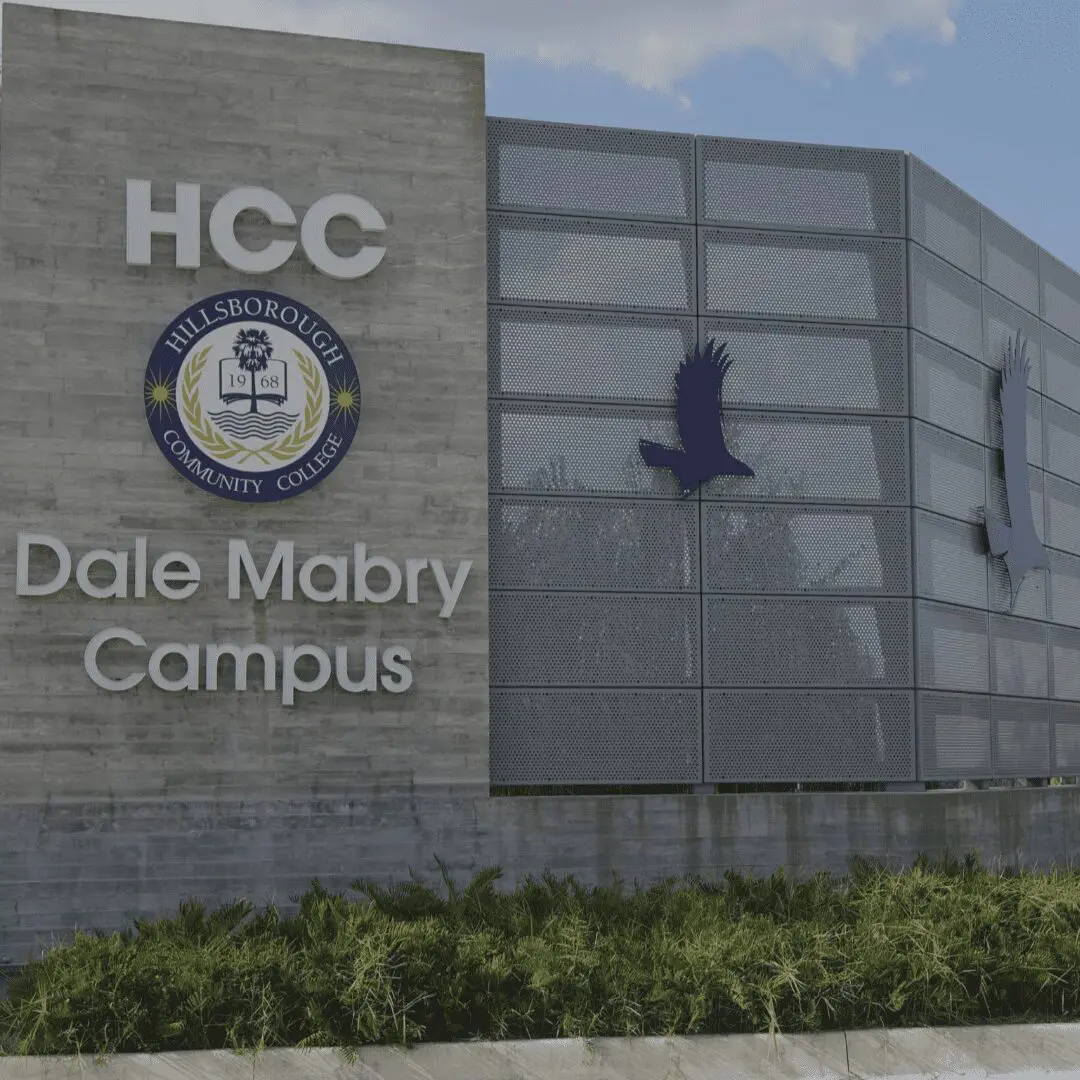
HCC 2023 Cybersecurity Summer Camp

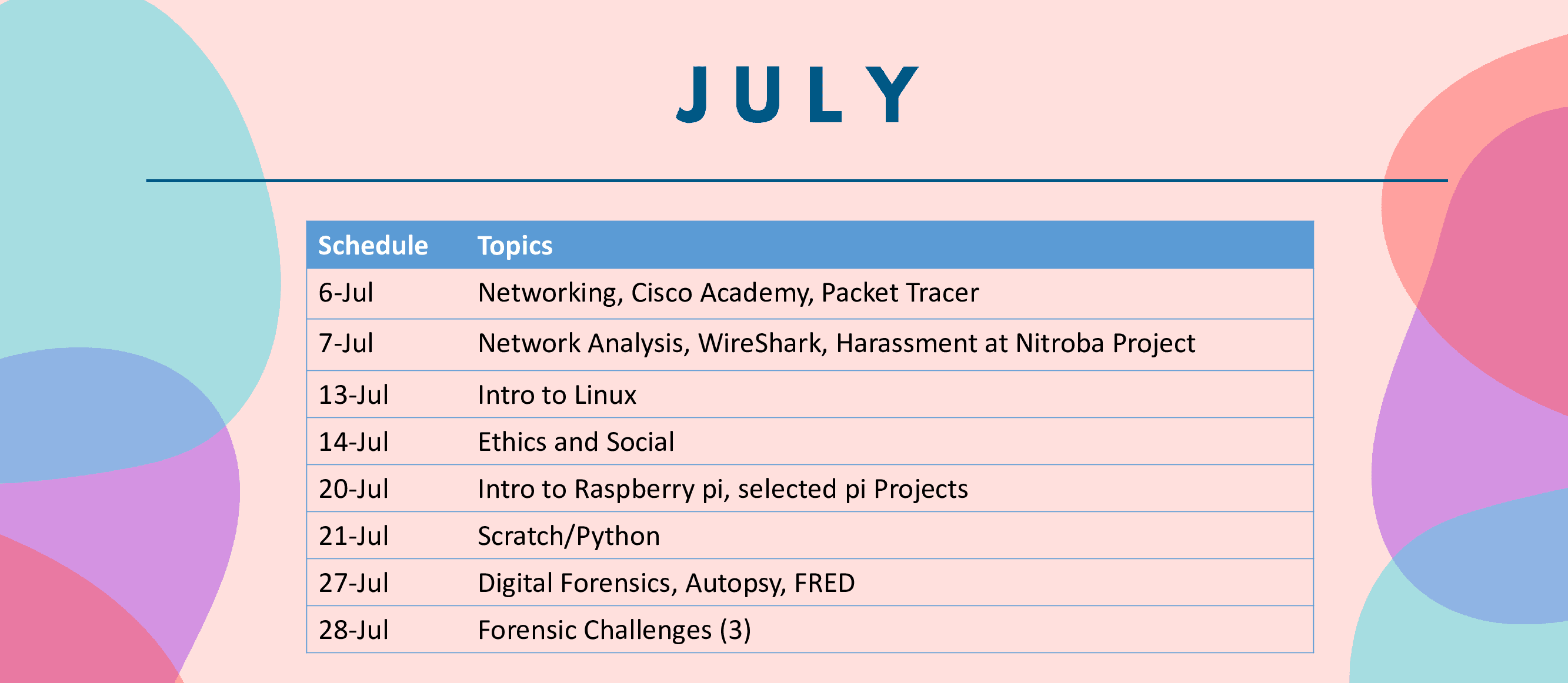
In collaboration with Florida Department of Education, the Florida Center for Cybersecurity (Cyber Florida), and the University of South Florida, Hillsborough Community College is running their first ever FREE Cybersecurity Summer Camp! This camp is being offered to all Hillsborough County High School students in grades 9th – 12th. Come join us for a summer of fun and learning!

Have fun and learn all about cybersecurity from the faculty and staff of HCC’s Computer Science Department. No previous knowledge is required, just come with a passion for learning and an interest in meeting and collaborating with like-minded peers. This camp will focus on topics such digital footprint and open-source intelligence, networking, digital forensics, and more.

Students who attend all scheduled meetings will take home their very own Raspberry Pi 4!

HCC 2023 Cybersecurity Summer Camp2023-09-16T16:55:46-04:00

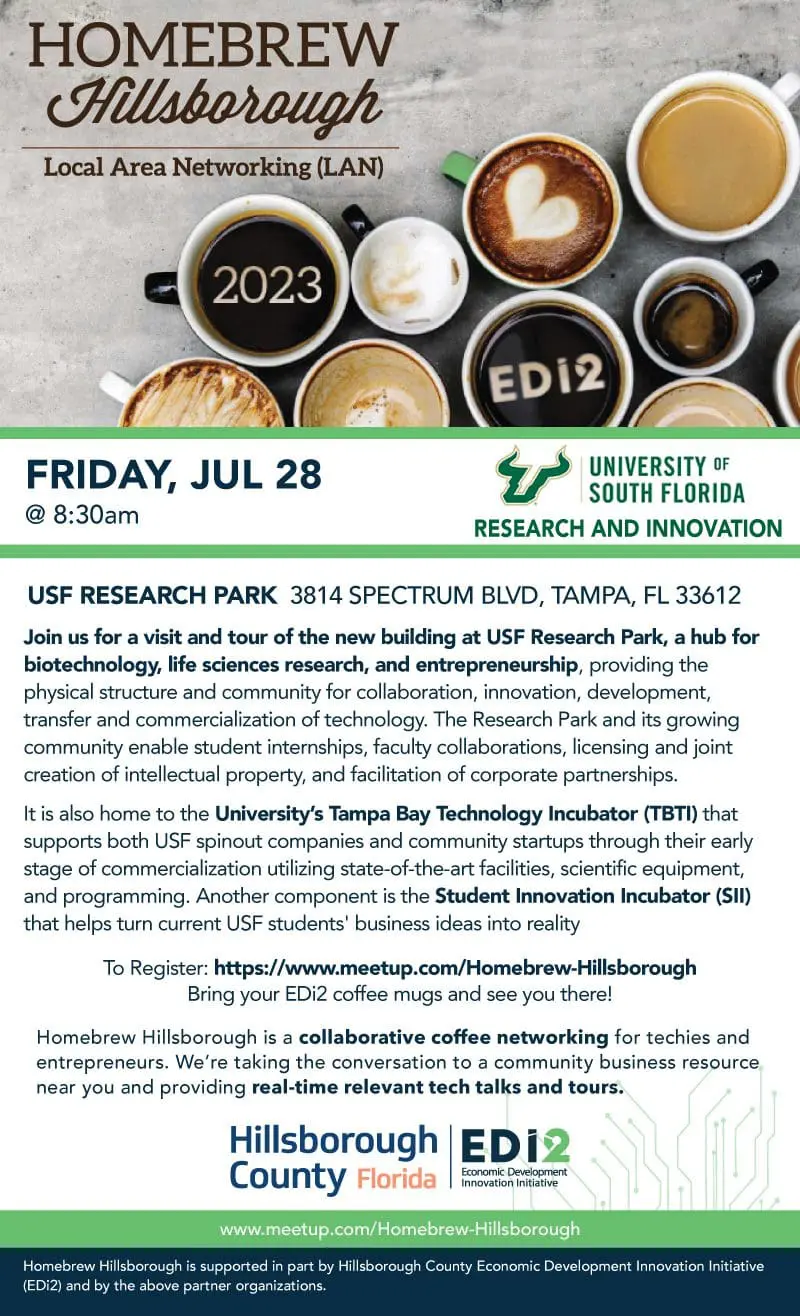
Homebrew Hillsborough

Homebrew Hillsborough is Hillsborough County’s monthly collaborative coffee networking for techies and entrepreneurs. We’re taking the conversation to a community business resource near you and providing real-time relevant tech talks and tours. Come meet with others in our community to expand the network and see how we are creating a Homegrown Hillsborough.

Homebrew Hillsborough2023-07-31T13:20:17-04:00

Dr. Kerry Buckley

Vice Chair, Cyber Florida Board of Advisors. Vice President for Air Force Programs, The MITRE Corporation. Former Director, MITRE Information Technology Center. Former Personnel and Industrial Psychologist for the US Office of Personnel Management.

Dr. Kerry Buckley2024-09-25T13:44:31-04:00

Jan Tighe

US Navy (Ret.): Board of Directors, Goldman Sachs, Huntsman, IronNet and Board of Trustees MITRE Corporation. Former Commander, Fleet Cyber Command and US 10th Fleet; former Director of Naval Intelligence and Deputy Chief of Naval Operations for Information Warfare.

Jan Tighe2024-09-25T13:44:42-04:00

Bob Rose

Bob Rose is an internationally recognized cybersecurity expert providing the U.S. government and companies strategic counseling and governance on a full array of cyber-related issues at the nexus of technology, national security, law enforcement and privacy. Bob previously served in various appointed U.S. government advisory positions in the areas of national security, cyber and homeland security. He was a member of the U.S. Department of Homeland Security’s Homeland Security Advisory Council, the National Security Agency’s Cyber Awareness and Response Panel, the National Counterterrorism Center Advisory Board and the Department of States International Security Advisory Board. Current corporate and non-profit advisory service includes The Chertoff Group, 1Kosmos, Securonix, Clarivate, the McCrary Institute for Cyber & Critical Infrastructure Security at Auburn University, the Homeland Security Experts Group Steering Committee and the State of Florida Center for Cybersecurity.

Bob Rose2024-09-25T13:44:57-04:00

Developing Cybersecurity Curriculum with Cyber Threat Intelligence and Honeypot Platform

Join UNF on June 26, 2023 for a workshop on cybersecurity curriculum development!

With the rapid development of attackers’ Techniques, Tactics, and Procedures (TTP), it is necessary for cybersecurity analysts to develop cyber defense knowledge to protect cyber assets. The field of cyber threat intelligence provides a broad range of techniques for collecting useful information to analyze the attacker’s TTP. In this workshop hosted by the University of North Florida, instructors will discuss the development of a Cyber Threat Intelligence course. Moreover, they will discuss how the deployment of a Honeypot server can be used to improve students’ understanding of cyberattacks. Finally, they will discuss issues and considerations related to the development of cybersecurity curricula.

This workshop is open to all – click the link below to register!

Developing Cybersecurity Curriculum with Cyber Threat Intelligence and Honeypot Platform2023-07-31T13:16:55-04:00

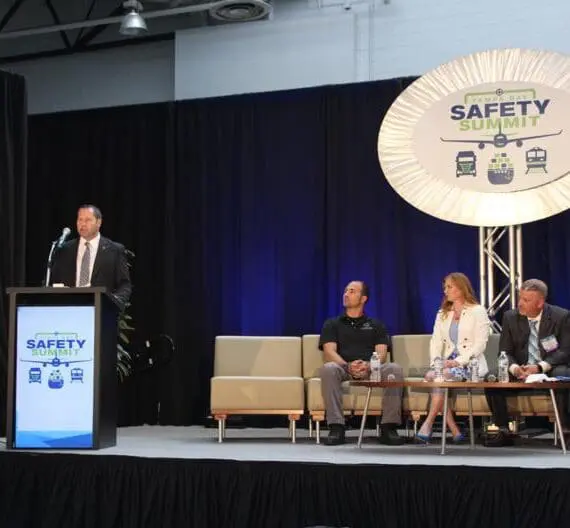
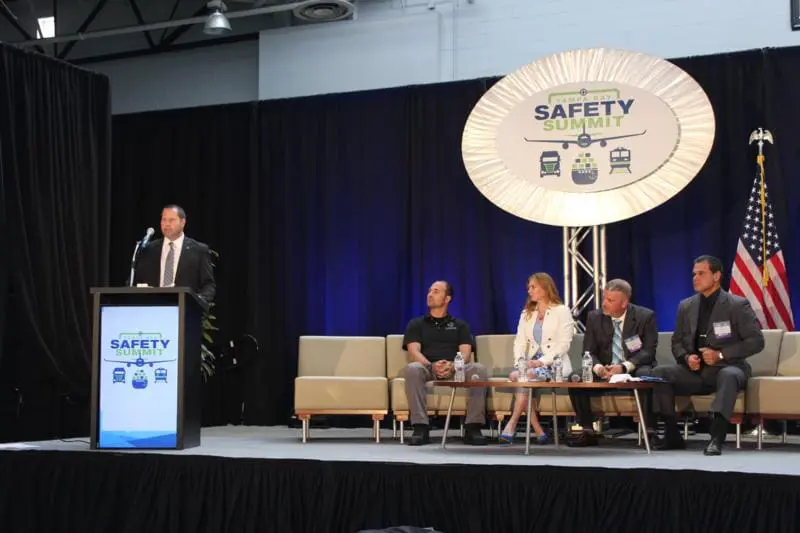
Tampa Bay Safety Summit

Port Tampa Bay and Tampa International Airport are proud to announce the 8th Annual Tampa Bay Safety Summit!

The 2023 Tampa Bay Safety Summit will include a vast range of local, state and federal representatives, as well as a variety of industry experts to engage you with presentations and panel discussions relating to safety, security and operational readiness, in an open forum setting.

This year’s keynote speaker will be General Kenneth F. “Frank” McKenzie, USMC, Retired. General McKenzie is the former Commander, United States Central Command (CENTCOM). His distinguished and highly decorated military career includes over 42 years of honorable service to our country. Today, General McKenzie serves as the Executive Director of Cyber Florida as well as USF’s Global and National Security Institute.

Additionally, Cyber Florida’s Emilio F. Salabarria will be presenting on the Critical Infrastructure Risk Assessment. If you want to learn more about this initiative and how your organization can help protect Florida, register now and ask your questions live!

Featured Speakers

  • General Kenneth F. “Frank” McKenzie, USMC, Retired – Executive Director USF Global and National Security Insitute & Executive Director Florida Center for Cybersecurity, aka Cyber Florida
  • Emilio F. Salabarria, Deputy Senior Executive Advisor, Cyber Florida
  • Paul Anderson, President and CEO, Port Tampa Bay
  • Dr. Yu Yu Zhang, Department of Civil and Environmental Engineering at University of South Florida (USF)
  • And more!

Agenda

  • Session 1 – Port Resiliencey (Maritime and Aviation)
  • Session 2 – Drones & Advanced Air Mobility
  • Session 3 – Current Challenges for CBP in the Maritime & Aviation Environment
  • Session 4 – Statewide Critical Infrastructure Risk Assessment

Event Details

  • When – Tuesday, June 06, 2023
    • Sign-in and Continental Breakfast starts at 7:45 AM
  • Where – Tampa International Airport, Main Terminal Event Space
    • Parking available in the Economy Parking Lot
    • Take SkyConnect Train to Main Terminal. Access station from elevators located on Level 1 of the garage
    • Event Space is located in between Airsides E & F on Level 3
    • Parking validation will be provided at sign-in
Tampa Bay Safety Summit2023-07-31T13:20:54-04:00

2023 FBI Cyber and Emerging Threat Symposium

Join us June 1, 2023 for the FBI Cyber and Emerging Threat Symposium!

An external attacker can breach an organization’s network perimeter and gain access to local network resources in 93% of cases. This study included financial organizations, fuel and energy organizations, government bodies, industrial businesses, IT companies and other sectors.

As cybercriminals continue to breach organizations the Florida Technology Council, in partnership with the Federal Bureau of Investigation, Cyber Florida and the University of Florida bring you the latest cybersecurity trends, threats and necessary information to protect yourself and your organization before, during, and after an attack.

This free symposium will feature presentations and question and answer sessions with FBI special agents who specialize in combating and investigating cybercrimes, foreign intelligence matters, crimes against children and more. And we aren’t stopping there – for the first time ever, this event will include a Cyber Table Top Exercise and Incident Response Plan Discussion, a Counter Intelligence Threat Presentation from the FBI, as well as a high level session hosted by the Cybersecurity and Infrastructure Security Agency.

Discover the tactics identity thieves use, how to protect your organization and so much more. This educational symposium is open to all county, city, and municipality leadership as well as academic and business professionals without cost.

2023 FBI Cyber and Emerging Threat Symposium2023-06-05T10:47:20-04:00